19December2015
Interview with Author N. Cognito, the published author of the book, 'When
Hell Becomes Your Home, How I Survived 14Years in Prison.'
* Mr. N.Cognito, thank you for taking time out of your busy day to conduct
an interview which I wish to share with the public in my blog. We've been
friends for some time and you've been instrumental in my training and
knowledge, so I feel that your actual experiences lend weight to your knowledge
and advice in the realm of certain subjects. So that being said, let
us begin, but first let me lay the ground work for this interview before asking my question.
* (AnDrew) My friend, I've seen a great deal of instructors in the martial
arts and Combatives world propagating theoretical empty hand knife defenses
against a criminal attacker, as well as many propagating their various
theoretical styles, systems, or theories as the ideal methods for
which to quickly deal with a criminal attacker (or attackers) in a life
and death struggle.
However, both you and I have an extensive history with real-world
violence, in various forms, outside of the sporting ring, and like many people
out there we can spot the dubious. Particularly when a renown instructor
is teaching and demonstrating to female students, as well as men, to deliver a
closed fist punch the human 'skull' (head) in order to "shake the
brain" and cause concussion.
When instructors are frivolously teaching students or the public that
striking the nose upward will drive the bone of the nose into the brain.
When instructors are teaching students to execute three to five moves
to counter every one move from a theoretical knife wielding maniac, as if
the attacker will always lunge forward in a fencing attack that
leaves the weapon arm fully extended without retracting it as a
boxer would or simultaneously striking with his other hand while
driving forward with his body, long enough for them to execute their
disarm and counter.
Or when instructors are teaching students or demonstrating for
the public that the fastest way to neutralize a violent threat in an
unarmed close-quarter-defense situation is to resort to a series of sport based
punches, knees, and kicks against a violent,
larger, stronger, criminal attacker who may have lived an extremely
violent life and has been 'punch inoculated' more than even
a hard-core Kyokushin, Kajukenbo or Muay Thai boxing
school can legally or safely subject their student too.
It seems that so many are commercially selling fraudulent life
insurance and personal security to masses of unwary people who believe
that their instructor has the knowledge and experience to pass onto them skills
that will save their life in a violent, criminal, attack. Or that these methods
are the very best for both women and men in dealing with a criminal
attacker (or attackers) while unarmed, during a frantic and violent assault.
* (AnDrew) What are your thoughts on bare knuckle boxing, almost brawling,
and the knife defense methods seen being propagated by reality-based defense,
Combative, or martial arts instructors whom are flooding the internet with
their videos and whom some have even have found their way into teaching law
enforcement, security groups, and military units?
* (Mr. N. Cognito) Honestly
most of
(but not all) what you have shown me on the web and what I have
personally witnessed being propagated is by individuals whom are out to make
money through the marketing of impressive fight choreography or
they're individuals whom are involved in ego-masturbation through the
martial/combat arts.
*Then there are the various athletes who come from
sports
based combat arts, whom are in their own right
very
effective and experienced in dealing with a
single,
unarmed,
opponent (usually
from the same weight class) but they are claiming to be able to apply that
experience and skill set as experts in the world of life or death military
close quarter combat. Many having never served in an active duty Infantry unit,
so they have no clue of the physical limitations that apply to an individual
whom is carrying a massive amount of heavy gear on his body, is operating at a
level of fatigue that surpasses professional sports, while dehydrated, and
most likely hasn't slept in over seventy two hours, while
mobility is constricted by a fifty pound flack vest, a load bearing
vest carrying ammo, canteens, and gear, as well as a Kevlar
helmet. Someone soaked with water or perspiration which will cause
his trousers, perhaps his whole uniform in some cases, to stick to his flesh
and further hinder certain movement. And at least one hand will most likely be
occupied at all times with a weapon of some sort. Sport-based ring
fighters have no experience with fighting under such conditions
and many instructors in martial arts/ combatives/ or
reality based self-defense don't either. In fact, many military
veterans whom have never served in an active duty Infantry or special
operations unit would not have the experiences to appreciate how
these issues effect close quarter combat/hand-to-hand combat
capabilities against a larger, stronger, better rested, trained enemy
combatant(s) whom wish to either capture or kill you.
* That being said, most of what these individuals whom I see marketing themselves
as experts in the realm of combatives or martial arts are demonstrating methods
which would
not be prudent in the realm of
battle-field close combat. Even during my generation in the Army, the Gracie
combative methods were first being introduced to the third ranger battalion in
Ft. Benning Georgia and then disseminating out to Infantry units abroad. The
ground-escape
methods and some of the submissions were excellent for helping a combat soldier
escape from being held down by a stronger, more rested, or larger enemy in a
life or death struggle. However the focus didn't remain on simply escaping
the ground and learning some submissions because they later began
training Infantrymen to tackle an enemy below the waist, to bring them to the
ground, and then fight the enemy on the ground with submissions, limb breaks,
chokes, and even closed hand punches to the hard structure of the face or
skull. Almost exactly like what you see being taught in
sport-based
MMA ring fighting.
* Ground grappling has been proven many times to be much more
effective,
one against one, in a fight than bare knuckle
boxing styles. During my time in the Infantry it was a very common past
time, sometimes illegally, for the various trained boxing champions, black
belts, Muay Thai boxers, high school and college wrestling champions, and
experienced street fighters to test our skills against each other in full
contact, bare knuckle, one-on-one fights. Just like we saw in the original
ultimate fighting challenge which the Gracie family conducted in Las Vegas
Nevada in the late 1980s and early 1990s.
*We had men from different military branches and even a few from
special operations units get in on the action because we all wanted to test and
prove ourselves. Their was no money involved. We were simply professional
warriors as well as fighting men, whom were always testing ourselves in every
way possible and this was simply one more arena in which we needed to
assess our true capabilities among the very best of the best. If we had cell
phone video cameras in those days we would have been an internet sensation for
the individuals who have the same questions about their training
and abilities but are unable to take the challenge and learn for
themselves. And I deceive you not, that the most successful guys in all of
those challenge matches were both the wrestling champions and the guys who
fought using the dirtiest methods; the rough and tumble fighters.
* One individual, whom I recall was an E5 sergeant named
Velasco, admitted to having absolutely no boxing, wrestling, or
martial art training whatsoever but he earned a fierce reputation for fighting
so dirty that all of the martial artists, MMA guys, wrestlers, and boxers
stopped accepting challenges from him. He was just a very 'tough' guy
who didn't mind pain, could take a hard hit, and always went for the
testicles, throat, eyes, and fingers. He's seize and twist
the testicles of the grapplers on the ground, try to grab and break
fingers, fish hook mouths and nostrils, try to tear off guys'
noses or ears, seize and squeeze their trachea, box their ears, bite and use all
manner of foul tactics.
*Once I recall he was struggling on the ground with a skilled
grappler with MMA background and it looked as though he hadn't a snow
ball's chance in the tropics when the guy he was fighting
full contact, no holds barred, yelled out and quickly released Sgt. Velasco
all the while the sergeant continued his ruthless attack during that
moment of shock and executed a strangle hold on his victim. After the fight
the younger soldier protested that Sgt. Velasco had violently jabbed a thumb
into his rectum through the material of his battle dress uniform trousers and
it was both so shocking and painful that the MMA guy abandoned his hold and
attempted to retreat when sergeant Velasco seized the opportunity to take a
strangle hold on his younger, mixed martial art trained, victim.
* This testimony about sergeant Velasco illustrates something I saw time and
time again in these matches. Although the wrestling champions usually dominated
both the western and eastern boxers, various black belts, and kick boxers the
one consistent weakness inherent in the combat 'sport' champions and
competitors was
they had TRAINED for many years to attack and
fight in a manner that was 'fair' and 'legal'. It was ingrained into their muscle memory.
*These days I hear ALOT of champion sport-based fighters claim
that they can always use dirty tactics in a fight, same as anyone else, but in
my personal experience and in my personal observations,
men in combat
'react' the way in which they were trained to react. Once a man is in
combat and he gets rocked hard, his fear and adrenaline is up because he knows
this isn't a refereed match and the guy he's fighting is out to 'really' hurt
him, or when he gets dazed really good by a solid strike he's can't 'think'
critically anymore.
Now he's operating on pure muscle memory and
ingrained reaction,
which is whatever he has been trained to
do over time and repetition.
This is why the 'sport-based' fighter's strength
in the ring is also his greatest weakness on the life or death battle field
because he is pre-programmed (trained) to fight according to a particular set
of attacks deemed 'legal' by his particular combat sport association.
Fighters
under duress react the way that they've trained to react, same
as Infantrymen and special operation warfighters do. They fall back to their training (ingrained, pre-programmed, reflexive responses) once duress, fatigue, concussion, injury, adrenaline and visual-audio-distortion take effect. The soldier that trained almost exclusively so that his primary mentality and method of attack is to
seize and
squeeze the trachea will react
instinctively react this way in a fight. The soldier that trained almost so that his primary mentality and method of attack is to
kick and punch will
instinctively react this way in a fight. The soldier that trained his central nervous system and muscle memory to
control the hips and
take his
enemy to the
ground to execute a
rear strangle hold will
instinctively react this way in a fight.
How you train is how you'll fight!
* But what about the martial artist black belts, who didn't come from a
'sport' based martial/combat art, whom fought in our matches on post? You might
argue that they were not trained to use 'legal' strikes but street applicable
techniques for self-defense. Well, those guys never faired well in the
bull ring
nor in the
no-holds-barred challenge matches we held off duty at night either.
As I said, the
wrestling champions dominated all of the other fighters with the
exception of the few guys whom were very
skilled and
dirty fighters and
had
a lot of
experience in real-world fighting since
their youth. These were not the former street gangsters or thugs either,
because those guys grew up fighting with back up from their homies,
jumping individuals, or preying
on the weak, and seldom had any real training.
*Rather it was the little guys, or guys whom had been small for their
age, growing up and facing down all of the large bullies, thugs, and gang
bangers
without any back up during their child hood and
teenage years. The guys whom had to fight all of their life against all of their
bigger brothers on the regular, in no holds barred fights. Some of them had
martial arts or combat arts training but they got most of their
combat experience from
'real world' fights where there were no rules, no weight class, no referee, and
most often than not
multiple attackers trying to
maim or cripple them.
* Let me also address that many of the martial arts which claim
to
not be 'sport' based but reality/self-defense based
schools still evolved from 'sport' based combat/martial arts and that is seen
in their preference for closed fist boxing, high kicks, and sport-based
grappling submissions. Also there are many self-defense martial art schools
which
never engage in any real fighting against opponents from
different weight classes, multiple attackers,
under full contact. Part of
these reasons, minus the multiple attacker scenario, is why traditional
Japanese Jujutsu schools were defeated by Kano Jujutsu, which later became
Judo, in full contact grappling matches. Although they were not allowed to
use their
atemi strikes, which were instrumental to setting up all of their
throws and grappling holds, the traditional Jujutsu schools failed in
grappling against Kano's Judo students because
full contact grappling
was the most important part of
Judo training but in the
traditional
Jujutsu schools they only practiced the moves but
did not engage in full
contact randori.
*This same reason is why 'sport' based
western boxers often
dominate eastern Chinese kung fu boxers, karatekas, and tae kwan do practitioners
in street fights. Because western boxers fight full contact from the very start
in their training and get real experience in being hit hard in the face, head,
and body.
Kyokushin kara te being an exception. However, I never witnessed a golden glove, or even a former
pro boxer, in the military dominate in a no-holds-barred fight against a very
skilled wrestler.
*I'd like to add, concerning the issue of
bare knuckle boxing methods seen
in Suntukan, Panantukan, Kali, various other martial arts demos that we've
watched online, as well as many of the big name Combatives instructors it's evident to me that they've not been in very many
serious brawls against
multiple, larger,
stronger,
determined fighters. The reason that I make such a
bold claim is that anyone whom has fought a great deal with their
fists knows
that getting a one or two punch knockout is more uncommon than the fight
escalating into an all out
brawl. And every man whose engaged in many bare
knuckle battles has suffered at least once having his knuckles
cut on his enemy's
tooth, suffered busted knuckles, or has broken his hand. Even the undisputed world champion Mike Tyson, whom I doubt anyone reading this would claim to be a better boxer than he, broke his hand in a street fight against Mitch Green. When
fighting off multiple
attackers, which is
extremely common in real-world self-defense
situations, trying to be
precise and land every shot on the
chin without
hitting the
teeth is
extremely difficult. One can even hit the
hard
hip bone or
elbow of an adversary while hook punching the
liver or floating ribs during a frantic combat situation. All of the experts
whom claim that
only amateurs break or injure their hands during a fist fight need only to be
directed
once again to the
August 28, 1988 street fight between undisputed world heavy
weight boxing champion
Mike Tyson and Mitch Green where
Mike Tyson broke his
right hand against Mitch Green's face during a one-on-one fight. Mitch Green
only sustained an injury requiring stitches of his eye and walked away with no
broken bones or ruptured internal organs despite being punched bare knuckle by
the undisputed Heavy Weight Boxing Champion of the World.
Imagine if
Mike
Tyson had fought
multiple attackers and we can see how the
chance of self-injury would have gone up
exponentially to his
unprotected
hands...
Are we more skilled than Mike Tyson? Gloves were introduces to the 'sport' of boxing to protect the boxers'
hands and allow them to throw more powerful punches in bunches. Not to protect their face nor head from injury, as many mistakenly
believe. It was to make the sport more exciting for the spectators and facilitate a higher chance of seeing a knockout in the ring. Which made the sport more lucrative by giving spectators and gamblers what they wanted. It was all about money, not safety.
*Anyone whom watches the UFC fights can witness powerful
boxers with reinforced hand and wrist protection (permitting them to hit much
harder than with bare knuckles) delivering frightening amounts of punishment
from their punches and, despite the occasional knock out, these fights often
become long lasting brawls where the two fighters trade punches for what can
seem like forever.
Under the powerful effect of adrenaline men can absorb
tremendous amounts of abuse and trauma to the face and head from blunt force
trauma
and still keep fighting without realizing how much injury they're
sustaining. Unless a man gets knocked out, if he's accustomed to abuse, he can
take punches to the head and face all day without showing any sign of giving
up.
In fact the more he is punched in the face the more his body dumps pain
killing, energy boosting, adrenaline into his blood stream. Therefore your only
hope of finishing the fight is to land a fortuitous knock out blow or to get in
close and grapple him with a choke, strangulation, or break his spine, neck, or
maybe one of his limbs. Because pummeling away in a bloody brawl is not
usually (there are exceptions) the most efficient method to quickly neutralize one or more,
determined, violent attackers in a real-world combat situation.
*Now some will say that a trained striker or boxer, of whatever style, will not get into a brawl but will end the fight in a few
precise strikes. That sometimes does work and in my personal experience it has
worked for me as well. One lucky, well timed, punch on the chin or the liver
has successful put a single attacker down or unconscious. But honestly, this
was and is less common than having the punch erupt into either having to unload
a continuous barrage of strikes until I could escape, until the fight was broken
up, or until it ended up into a brawl against multiple attackers coming to the
aid of the individual on the receiving end of my pre-emptive attack or
counter-attack.*
*
Let me also add that I’ve sustained serious injuries to my hands,
mostly to the right hand, due to boxer fractures, busted knuckles, a tooth
imbedded into my hand and tooth cuts on knuckles while franticly battling
multiple attackers in my younger days. I knew a convict who was a renowned bareknuckle fighter
that lost a finger and permanently disabled his right hand after he knocked a
much younger man out in a one-on-one fight, but the young man’s tooth had
imbedded itself into the older man’s fist between the knuckles followed by
infection, despite his cleaning the wound. He was an organized crime
gangster, a former boxer, and a karateka with a lot of experience in fighting,
but he learned the hard way the dangers of bare knuckle striking the face/head
targets with an unprotected fist.
*(AnDrew) So are we to surmise that
you don’t believe western or eastern bareknuckle boxing; gung fu or kara te, to be prudent
as a form of self-defense or is it only that you don’t believe it prudent as a
form of professional close quarter combat/hand2hand combat for Infantry and
special operations combat soldiers?
*(Mr. N. Cognito) Honestly if we are
talking about life or death survival, be it on the street, on a military
battlefield, or inside of a violent prison, we can call it self-defense, close
quarter combat, close quarter defense, hand-to-hand-combat, or combatives.
What
we call it is irrelevant. If we are talking about
life or death survival, combat,
outside of a sporting ring, it should be considered life or death
situations because one can never underestimate the intentions, the abilities,
or the friends/family of the criminal attacking you.
Unless you’re the type to
go out looking for trouble; I/E:
a thug, gangster, or bully, and you’re a law
abiding civilian, then the only type of person that you should ever face in a
violent altercation is a criminal attacker.
And you should never underestimate
the ability, intent, or mentality of any criminal. Always assume that he has
back up nearby whose intent, abilities, and mentalities are of
the most dangerous kind. If you are a combat soldier, or even a L.E.O., then
you must assume that anyone who attacks you in close quarters is intent upon
taking your life or possibly kidnapping you before taking your life.
Regardless, in my experience, one should view all violent attacks upon oneself
as life or death situations. Because in reality they are such or they can quickly
escalate to become one.
Men even die accidently in one-on-one mutual combat
brawls, so even if the intent to kill is not present the risk is always ever
present anytime you are criminally attacked.
*So to answer your question about
boxing arts, be they Western boxing or Eastern boxing; gung fu, karate, muay
thai, suntukan, etc.,
being the most prudent form of quickly neutralizing a violent
threat in a life or death situation I will say no. And my reasons are detailed
in everything that I said earlier. The way in which it is currently taught and
practiced by most
, but not all, of
the world today is not prudent because closed fist striking the bony targets of
the face and head, with the dangers of getting a blood borne pathogen or
infection from the teeth, and the risk that the fight can be prolonged into a
brawl if the attacker(s) are real fighters, masochists,
or hyped up on
chemicals.
The chances of scoring a quick knock out against one or more
attackers during a frantic combat situation
are not greater than the chance of
disabling one’s hand, permanently injuring the structural integrity of one’s
grip, acquiring a blood borne disease or infection, or the fight becoming a
drawn out brawl where one’s chances of sustaining severe injury (maybe death)
increase exponentially. I'm speaking probabilities. Again there are exceptions and we all had days where fortune smiled down upon us.
*(AnDrew) So for anyone who reads
this, are you saying that boxing or striking arts are useless as self-defense,
hand-to-hand-combat, combative methods? And if not, which boxing methods would
you say are better suited for real-world self-defense and close quarter combat
situations?
*(Mr. N. Cognito)
First let me
clarify the difference between ‘self-defense’ and ‘close quarter combat’, or
whatever the flavor of the month name people wish to call it now days.
Self-defense is to injure an attacker(s) enough to create an opportunity to
escape and get away. Okay?
Now close quarter combat, or whatever else you wish
to call it
, is for individuals who don’t have, for whatever reason
, the luxury or
option of escaping. This is when you have to quickly neutralize your
opponent(s) by maiming, crippling, or killing them in order to stop them from
attacking anymore. Or it’s meant to allow you to create space between your
attacker(s) in a life or death situation so that you can access a dedicated
weapon; firearm or blade, to put down the threat(s) as quickly as possible
before they can injure or kill you.
*Moving on to your question, if one
is training for either self-defense or close quarter combat
the goal is not
just to
quickly and
efficiently neutralize one’s
attacker(s) but
to do so without injury
to one’s self. If we injure ourselves by breaking our hands or cutting our
knuckles on their bloody, infectious, teeth and we ourselves end up sustaining
life changing injuries while delivering relatively minor injuries to our
attacker(s) than how is this really ‘self-defense’? On the contrary this is the
opposite of defending one’s self, but rather it is ‘self-destruction’.
And for
the ego driven men who claim that they don’t mind injury to themselves as long
as they ‘win’ the fight by beating up the other guy(s) then their definition of
‘winning’ is foreign to me and there’s nothing else to share with them but
this. When I sustained life changing injuries to my right hand the last time
that I ever used closed fist strikes to attack the face, head, and neck targets
of my attackers in a prison brawl I may have received respect from the
community for ‘winning’ the fight against three attackers. But deep inside my heart
I didn’t feel like I won that battle because my attackers all recovered from
their bloody cut faces, concussions, and bruises in time. But my right hand
never recovered and has never been the
same since that last severe injury to it using a
hammer fist strike to the base of one attacker's head/neck which resulted in the fifth metacarpal, distal end, snapping in half when it impacted the rounded skull during his frantic struggle to escape the beating. Then I used this broken hand to throw several right crosses, knocking down my attackers to see them jump back up under the influence of cocaine and adrenaline, which also resulted in injury to the fourth metacarpal and knuckle. I’ve broken my right hand six times
and broken my left hand four times, most often while fighting off
multiple attackers. And even though to
others it appeared that I gave my adversaries the beating it was in fact I
,
just like Mike Tyson when he fought Mitch Greene bare knuckle in the street,
who received the worst injuries…all self-inflicted.
*Now boxing and striking arts can be
very effective in self-defense and close quarter combat to create a distraction
(like atemi strikes in Jujutsu) or to discombobulate in order to set up other
attacks. Empty hand strikes can be used to maim, injure, disrupt, discombobulate,
disbalance, or set up a grappling attack;
throw, take down, submission, bone break, neck crank or a choke. A strike can
also be delivered as an effective, quick, finishing attack to a downed
attacker’s anatomical weak vulnerabilities. In
prison, skilled fighters, use boxing
to close distance on an opponent or victim in order
to take them down with a double leg takedown, body slam or other takedown. They're
not usually striking full power, the experienced fighters, with the intent to knockout with a punch. There intent is to knockout or break the body of their opponent/victim against the concrete environment and then either stomp them out, choke them out, drop elbows on their neck and face or dislocate their neck. Also, the boxing combination (fan) followed by takedown (scoop or dump) may be used to take them to the ground so they can be overpowered and sexually assaulted or murdered.
* Let me clarify that I believe
the
body mechanics of Western boxing
to be excellent training for
developing power
and mobility in a fighter. Just as
the body mechanics of wrestling are
outstanding for developing a good, strong, base and quick take downs. The
mechanics of Ving Tsun and Kunfa boxing, as I trained it under Sifu Keith Fain,
are
extremely effective at redirecting,
trapping, and bypassing incoming
strikes from a puncher and kicker
at extreme close quarters while
simultaneously uprooting the base of
one’s attacker by using the
forward motion of one’s legs and hips to attack
their structure. Having trained and competed in amateur western boxing,
practicing and fighting in karate/kick boxing, fighting against Muay Thai
practitioners, and training in Ving Tsun/Kunfa under Keith Fain of Clarksville
Tennessee, I must honestly say that I found
Sifu Keith Fain’s Ving Tsun/Kunfa
boxing method to be most practical for real-life
self-defense situations in close-quarters. Not to
say that it is better in a sporting ring, under sporting restrictions, but
rather under real-life close quarter combat environments, no holds barred, this
would be the only
commercialized ‘boxing’ method which I would invest any time
and money into
developing it’s principles and applications. However, one would
still have to train in practical
counter-grappling,
ground-
escapes, choking, neck
cranks, strangulation, as well as bone and joint breaking methods to become
‘complete’.
Sport boxing is still a good base, next to wrestling or any, full contact, standing grappling art, to train in. It can develop fitness and skills conducive to self-defense (attack and escape) but so can basketball.
Basketball players develop footwork, cardio, quick hands, ambidextrous coordination, learn to develop a low center of gravity to disrupt an opponent's balance and develop deceptive skills in tricking the human eye and faking out the opponent's reactions. So I believe western sport boxing develops self-defense (strike and escape) capabilities and so does basketball. Also, anyone skilled in basketball understands the effectiveness of elbows, finger jabs and using the feet and legs to take an opponent down.
But I'm not saying that basketball or western boxing are the most prudent training to develop unarmed 'close-combat' skills. So don't misquote me.
*
Western boxing body mechanics are
very good but to be
adapted effectively
for efficient,
bare knuckle,
self-defense they must be
retrained using methods from the much older
fisticuffs method of close combat which
was better suited towards no holds barred, real-world, fighting against both an
armed or unarmed attacker. Against multiple attackers there would something
lacking. Unlike modern ring boxing, fisticuffs did not have the protection and
support of wrist and hand wraps, tape, and gloves which allow modern ring
boxers to throw punches ‘to whom it may concern’ with of their power directed
at the face or head. The bare knuckle fisticuff boxers had to preserve their
hands for survival in a day when there was no government aid for disabled men
who couldn’t work manual labor or ply a trade for income. See: BareFisted Channel on Youtube for research.
*The
fisticuff boxer reserved hard,
conditioned, knuckles for the softer torso targets. Breaking the ribs,
rupturing the internal organs, striking deep into the
solar plexus (mark), digging
into the major nerve plexus, bruising the
liver and kidneys, hitting the groin or taking out the
quads or side of knee with knuckle punches.
The word 'punch' originally meant to 'puncture or stab'. This is what the knuckles of the fist, terminating at the end of metacarpal bones in the hand, are best at. Stabbing into the vital organs, weak floating ribs and structural weaknesses of the torso, groin and quads.
*The open hand
heel strikes and forearm;
radial bone and
ulna bone, strikes were reserved for targets ranging from the
clavicle upwards to the head. Contrary to popular misconception, originally,
the
fisticuff boxer employed
elbow and
knee strikes,
kicks, and
grappling into
his training thus making it a very well rounded martial art.
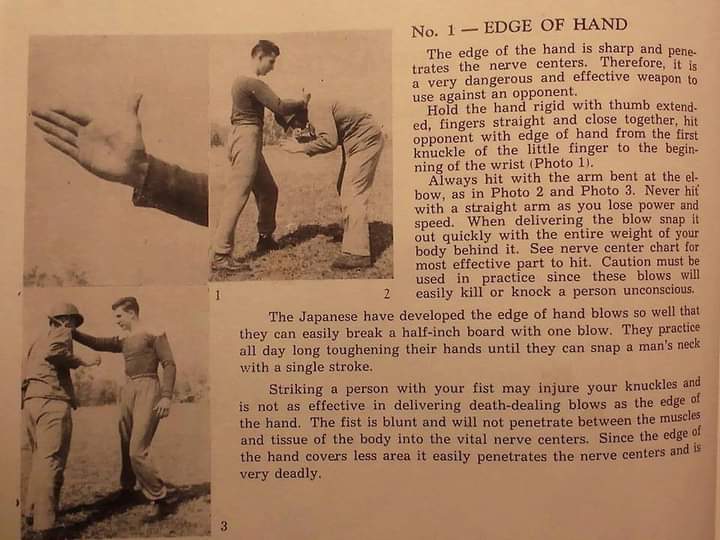
Open hand heel strikes, cuffs, edge of palm heel (chop), boxing (palm slapping) the ears, finger
jabs and thumb gouges to the eyes were the primary open hand strikes delivered to the traps,
neck, face, and head. S
trikes using the hard radial and ulna bones of
the forearms, as well as elbows,
were also primary strikes. Originally
the over hand right was not a punch with the fist at
all,
but rather
a strike using the radial bone to attack the trap muscle, side
or back of neck, and/or the steno-mastoid region to facilitate a knock-out.
*It has been demonstrated and
confirmed in modern scientific testing that an open hand slap using the
palm
and
heel of the hand generates
more concussive force than a punch with the
fist, proving the superiority of the open hand strike when delivered to the
targets of the head and neck as well as being safer (but not indestructible) for the hands than throwing
knuckles punches to the
bony targets of the head and face.
Every human being
knows when they fall on a hard surface to catch themselves by meeting the
ground or concrete with their palms and not their fists. So why would we hit a
person’s hard facial ( possibly cranial) bones with our fists and not our
palms? We can hit with more force with less chance of self-inflicted injury and
create a concussion to the brain, rupture ear drums and disrupt equilibrium,
rupture an eye, strike the temple, break the jaw, strike the steno-mastoid,
chop at the neck and/or trapezius muscle using open hand strikes. While
reserving the hardened, knuckle, punches for full force strikes to the torso
targets. Most of the knockouts were acquired by strikes to the torso/body
or body slams during the bareknuckle fisticuff era.
*There is a rule from the old
fisticuffs era before it was made a form of (sport) ring fighting and kicking,
eye gouging, eye jabbing, rabbit chopping the neck, strikes below the belt,
grappling, and open handed striking became illegal in the competitive ring bouts.
They trained for
hard striking with the hands, to always strike
‘soft to hard and
hard to soft’. However the evolution of fisticuffs from a method of close
quarter combat for survival to a
sporting ring duel caused the
closed fist
punches to be adopted for sporting reasons and the rule of the day for fighters
was
“snap the punches when striking the hard
bony surfaces of the face/head but
drive through the target
when striking the
softer torso
targets.” Eventually it
evolved even
farther with the
adoption of the
Marquess
of Queensberry rules and the
wrist and hand wraps with gloves to protect the boxers’ hands and wrists from
breaking
to allow them to put
full power behind their
punches to the
head and
thereby
increase the chances of
quicker knockouts during a bout. Spectators wanted to
see quick knockouts and they didn’t want to watch a fight last all day, or even several
days, as they had in the bare knuckle bouts of old.
*Today’s boxers would do well for
practical self-defense to return to training in the original fisticuff boxing
methods by incorporating
bare handed striking methods; open hand strikes to
hard surfaces and closed hand knuckle punches to softer torso targets, as well
as the low kicks to the shins, knees, testicles, and reaping with the legs, and
reincorporating the elbow strikes (like still seen in Thai Muay Boran). The
ancient Greek Pankratia boxers utilized ‘all powers’, as the name translates
in English, and they were the first ‘recorded’ mixed martial artists in
military history to incorporate empty hand western dirty boxing, the kicks,
knees, and elbow found in
muay boran, and grappling, throws, neck cranks, spinal compressions/breaks, chokes,
strangulations, limb breaking, eye gouging/jabbing and trachea crushing
techniques found in the most lethal martial arts today.
Nothing new is under the
sun.
*If you wish to make
boxing more
practical for self-defense you have to stop training for sport ‘ring’ fighting
and only train using the principles and strikes I’ve detailed above. And change
the guard and blocks completely to adapt to the reality of fighting bare fisted
attackers without large gloves, perhaps even armed with a razor or pocket
blade. Go back and study the
old fisticuff boxer guard and defenses. Without
gloves to hide behind and absorb punches the modern peekaboo style is less prudent
and the guard needs to be further away from the body, like what some are
renaming
‘the fence’ these days, in the manner the original fisticuff boxers
and Chinese Ving Tsun boxers use for a
guard. The similarity in the original
Fisticuff boxers guard and the Chinese Ving Tsun boxing guard is that the
outer
forearm is
facing the attacker to
hide the main arteries and ligaments on the inside
of the forearm
from a blade. And the guard held away from the face, protecting
center line, is used in both methods of boxing to offer maximum protection from
incoming strikes and
force the attacker to
attack in a
manner which is
to one’s
advantage.
*After having received a
self-inflicted, life changing,
injury to my hand the last time that I
broke my
hand using a
closed fist hammer punch to one of my three attackers during a
fight for my life in prison I began
retraining my
muscle memory every day on a
heavy bag for about twelve years until my muscle memory is trained to react
reflexively to use open hand strikes to specific targets and closed hand
strikes to the torso targets only. But standing
grappling methods are, and should always
be, the
back bone of any
self-defense or
close quarter combat approach.
Effective striking should
facilitate and
accompany one’s
close quarter grappling
methods.
*Many
ignorantly presume that
grappling is
ground fighting, as seen in the venerated Gracie Jujutsu and Kozen
Judo schools, but in fact grappling can refer to any method which incorporates,
throwing, reaping, sweeping, joint locking, spinal compressing,
neck
cranking/locking, bone/joint breaking, strangulation and choking techniques.
When
combined with effective, prudent, methods of
empty hand striking your
grappling will be your
most devastating threat neutralization methods.
Grappling also
gives you
more choices in how much damage you wish to cause
against your attacker(s). You can
submit, maim, cripple,
or even
kill using
grappling methods more
readily and with
more control than with boxing methods.
But standing grappling is always preferable in a self-defense (survival)
situation or close quarter combat situation as opposed to going to the ground
with one’s attacker(s).
And for moments when going to the ground with one’s
attacker(s) cannot be avoided then it is crucial to escape the ground and get
back to one’s feet and full mobility immediately. This is where
ground escape methods, like found in
Gracie Jiu-jitsu Combatives, but
not ground-fighting are of
vital importance in
ones
self-defense or close quarter combat training.
*To reiterate, yes,
boxing arts are
good but
must be modified from sport based boxing arts to
safer and
dirtier
forms of
striking.
In essence this is basically what William
Ewart Fairbairn did when he put together the simplest, safest, and effective
empty hand strikes for a hand-to-hand combat program (Gutterfighting) which he
taught to European, American, and Canadian military, law enforcement, and
intelligence agents prior to and during WWII.
In fact it was so effective on
the battlefield that allied forces were able to report back as having
successfully used it to effectively kill, in hand to hand combat, the very
strong German Nazis, trained in boxing, wrestling, and jujutsu, as well as
fierce Japanese Imperial soldiers whom some were trained since childhood in Judo/Jiujitsu or
Karate. The most effective methods of
open hand striking can be found in
Fairbairn’s method of Gutter-fighting.
Barry Drennan of Canada is the only commercial instructor I'm aware of whom teaches the public pure, unadulterated, Fairbairn WWII gutter-fighting methods that aren't mixed with Judo, Hapkido, BJJ, Boxing or some other martial art. See: Fairbairn Protocol H2H.
*(AnDrew) What about the
knife defenses we are seeing a lot of lately being
demoed by famed martial art masters, self-defense experts, and combative instructors
on the internet, in seminars, and in schools abroad? What are your thoughts,
based upon your personal experiences in prison, on knife defense methods and
how they are being trained by majority of students and instructors out there?
*(Mr. N. Cognito) Honestly it’s
getting really late and I’m tired. So I’ll save this can of worms for another
interview if you don’t mind. Just let me share this as briefly as possible. It
is without any pride and with much sorrow that I can attest to ‘
personally’
witnessing more
stabbings and
murders by
edge weapons, shanks,
ice picks, bone
crushers, or
knives than I care to recall or discuss in detail at this moment.
It was always
frightening to watch men get
butchered not far from
where I stood
by
men whom
I saw almost on a
daily basis. There is
nothing glamorous about
knife-fighting, as many seem to think, and it’s
nothing to glorify here or
anywhere else.
*That being said, I have trained in
Filipino Escrima and other methods of using edge weapons, prior to my fourteen
years within the penitentiary. I began as a very small boy learning these
things, as well as boxing, karate, and jujutsu. Before moving on to
other combat arts/systems and training for years in Hojo Undo style conditioning to
harden my knuckles, fingers, metacarpals, carpals, radial and ulna bones,
elbows, shins and feet (much to my regret at this point in life now that I have
some issues with circulation, nerve damage, and stiffness).
Filipino martial
arts training were
originally designed for the use of large
jungle knives (what
we’d call
machetes here in the Americas) and not for smaller fighting knives.
They do have a method that uses a dagger with the large
bolo machete which they
call espada y daga but there’re techniques we see a lot of instructors teaching today
using a
single smaller hunting
knife or dagger is just ridiculous to me. And I
won’t bother to comment on the
FMA disarming methods
against a k-bar style
combat knife or a
short dagger. It’s pure
ego masturbation the way I’ve seen
practitioners
demonstrate those type of
disarms. One of their
famous masters
I’ve seen
archive footage of him
disarming a bolo
machete at combat speed by
getting in close quarters inside of the swing of the long, heavy, blade which
seemed plausible. But the
same disarms they demo
against shorter
daggers and
combat knives is just…Well it shows me that
none of them have ever
used a knife
to
kill another
human being nor have they ever had a
kitchen or
combat knife
used against them by a
determined killer.
With machetes they may very well be
the world’s experts but from what I’ve seen in various FMA schools and
‘systems’
their short blade methods would only serve against an unarmed
opponent. As for their
disarming a short blade knife from an attacker
using
their empty hands, it’s
fantasy play.
They’ve never experienced or even
witnessed men kill or attack another human being with shorter knives to even perpetuate
some of the things they’re teaching to their naïve.
Try any of that in the
penitentiary and, sad to say it, there would be
a whole lot of sad singing and
flower bringing.
I still practice what I learned in Filipino Escrima and have
taught some of it to others in the context of using a machete or a kukri, which
is what the footwork and drills were developed for. But for using smaller
knives in an offensive or defensive manner there are much better and proven
methods. For shorter knives,
self-defense applications, I prefer the
Apache knife
methods.
Robert Redfeather, Alan Tafoya and Jason 'Snake' Blocker are the more renown teachers of the Apache
principle based method.
*
Let’s keep it one hundred here. A
lot of FMA propagators argue that the Filipinos are the world’s leading experts
with using knives in combat. If they mean they are world leading experts with ‘machetes’or
bolo knives in combat, than I shall remain silent, because I would have no idea
about that. Their
Philippine Special Forces and
Philippine Marine Corps Force Recon units carry and use
bolo machetes against Abu Sayaf terrorists in the Philippine islands. (That has
been confirmed). And Instructor
Tim Waid, former U.S. Marine Corps N.C.O., teaches the most practical, efficient, method of F.M.A.
in my humble opinion.
*
But I’d have to argue that violent
men in prisons, all over the world, especially prison gang members, are the
only true knife combat experts because these are the individuals whom actually use
knives and homemade daggers in both close quarter combat and assassinations as
a way of life.
*
Military soldiers, despite the hype,
are
not experts in fighting with knives in combat because
wars on battlefields
are
predominantly fought with
missiles,
bombs,
grenades, and
firearms. It is
extremely rare for a soldier serving in the military of a western nation to
ever use a
knife, or his
bare hands, to kill an enemy combatant on the battlefield.
Infantrymen and special operations soldiers rely upon
fire power to
win battles
so engaging in hand to hand combat and edge weapon combat, in a life and death
struggle, on the battlefield is so rare (according to the U.S. department of
defense reports) that one can hardly call Infantry or Special Operations veterans ‘experts’ in
knife
fighting or hand-to-hand combat.
Well trained, but
hardly experts because in
order to become
‘expert fighter’ in something one must have
experience in
that subject. A doctor only becomes an expert at open heart surgery by
performing actual open heart surgery of patients and having a high rate of
success.
Knife fighters must engage in actual knife fights. Knife fighting instructors, without combat experience, are knife fighting theorists and experts in knife fighting 'theory'.
*
If we examine the cultures where
hand to hand combat and knife fighting and attacks with knives are the highest
in the world it would be inside of prisons.
The reason is because men in prison
do not have access to better weapons so they have to perfect their hand skills
or fabricate weapons; garrotes, impact weapons, and homemade knives (shanks)
and ice picks to wage war or fight for their survival.
Prison is a war zone and
it’s all
close quarter combat,
no firearms to rely upon,
if you wish to
survive.
So truth be told, your real experts in close quarter combat and knife
fighting methods will be found among prison convicts whom have survived long term sentences in
general population.
*
Men who kill with knives don’t
attack in dramatic fashion like we see in the FMA demonstrations from Kali
groups. Just watch some of the security videos online of real murders carried out
by knife attacks or some of the prison knife fights.
Even knife attack videos from the Philippine Islands.
*
If you train martial arts or
combatives and think you’re training to disarm knives from a determined
criminal attacker then this is how you should train…
Tie the knife to your rear,
power, hand and then take a boxing stance. Hopefully you’ve trained in some
legitimate boxing so you have boxing skills.
Now attack jabbing with the left
to close distance and distract your opponent while stabbing with your right
cross, uppercut, and hook. When you can do that, incorporate a low flick kick
to your opponents shin with your boot followed up with your jab and when he’s
distracted cross, hook or upper cut with your rear knife hand. Then keep
lighting him up from both hands while you pivot to his outside and hunt for
openings to strike.
Now to test your disarming techniques,
tie a dull metal butter
knife to the rear hand of a trained boxer and let him hunt you down in a full
contact fight. Because that is how most one-on-one knife fights I’ve
ever witnessed looked. There are
numerous other methods of attacking with a knife, which I’ve personally
witnessed, but those are not ‘knife fights’ but rather they were
assassinations. Against an assassination, which relies heavily upon the element
of surprise, there is no reliable defense. You can be completely vigilant most of the time but not 100% of the time. If an unknown assassin wants to get to you, he'll eventually get to you. You’ll just get stabbed and try to fight
for your life, to survive, the only way you've prepared to.
*I’m not going to detail the various
techniques and methods of killing or attacking with a knife here, some of them the
public can read about in the book Put ‘em down, Take ‘em out by Don Pentecost. A
lot of other techniques and ambush methods you won’t find in his book but unless
you're preparing to possibly live in a violent penitentiary there is little need to learn
such evil things. And I have no desire to glamorize them or give any malicious
soul any ideas. However, if you train martial arts, self-defense or carry a weapon for self-defense than it would be prudent to learn something about this topic because the machinating judicial courts and the manipulators of the law don't always take side with the individual who is forced to exercise their innate right to self-defense or third party defense. A righteous man or woman can, sometimes do, go to prison. I'd describe prison, in my experience, as half demon farm and half gladiator school. (When Hell Becomes Your Home, by Author N. Cognito). If you carry a pistol for self-defense I'd recommend you become proficient in empty hand and edge weapon close-combat. Stay physically fit. And train to use and make improvised weapons. It may save your live should some far-left liberal judge, D.A. and jury not see things your way if you have to draw your C.C.W./pistol on a threat to your life or love one.
*(AnDrew) One last question and then
we’ll close until next time. I know that you studied and trained in various combat
methods over the course of your life time, but what would you say is the
dominant foundation of your personal approach to close quarter combat and self-defense?
*(Mr. N. Cognito) Alright, this won’t
be popular with your readers but
my dominant foundation for self-defense is
prayer to the Creator almighty (God) in Christ Jesus. He has kept me alive
despite countless dangers, battles, and impossible odds. Without His guidance
and protection I know in my heart I wouldn’t be here today my friend. I'm not superman.
*
Next I accredit wisdom, treating
others the way that I wish to be treated, showing respect to others, being
humble but standing up for myself, and paying attention to detail within my
environment are the basis of my personal defense.
*If you’re asking about close quarter
combat training and methodology or what I’ve relied upon most throughout my lifetime
of innumerable violent situations, attacks, and fights with trained fighters,
elite soldiers, criminal predators, thugs, bullies, bigots and penitentiary
predators then here is a brief synopsis.
*I’ve taken
western boxing body
mechanics and modified the strikes by incorporating
William E.
Fairbairn WWII Gutter-fighting
strikes to targets from the clavicle upward,
dirty boxing
knuckle
punches to the torso targets, the trapping, bridging, and redirecting
of incoming strikes from
Keith Fain’s Wing Tsun Kunfa boxing,
chop blocking
methods from
old style fisticuffs, limb destruction strikes from
prison boxing,
the
evasive movements and
principles of redirection and
non-resistance from
Tenshin Aikido,
standing counter-grappling methods from
Aiki-Jujutsu, Pencak Silat leg attacking methods,
a lot of Israeli Krav-Maga methods and
ground-escapes (
not ground fighting) methods from
Gracie
(Jiu-jutsu)
combatives. I incorporate conditioning methods for hands, fingers and forearms.
Edge
weapon empty-hand defense I train from practical prison methods,
not from any martial arts
or combatives approaches I’ve ever seen taught or demonstrated. And I feel it’s
very important to
run and work the
heavy bag for
cardio! You have to be fit,
not brutally strong, but
physically and
mentally fit in order to increase your
chances of prevailing against a larger, stronger, determined, probably punch inoculated,
attacker(s). And I
never train with the
idea of facing a single violent attacker but rather I
always expect to face multiple, probably armed, attackers. There are no acceptable exchanges in close-combat or a street fight because predators, sociopaths and psychopaths use weapons and you'll most likely not see the weapon until you're bleeding out or your lungs are collapsed and you're fighting to get air. Most of the physical combat methods that helped me to escape or dominate attackers, while surviving in interesting places, I think were adapted from Krav-Maga, WWII Jujutsu based military combatives (taught to me by Mr. W.A. George during my highschool years), Keith Fain Wing Tsun Kunfa and Aiki-Jujutsu 'with my own applications'. By the
grace of the Lord almighty I may not be in the best health of my life,
having
sustained life changing injuries, but
I’m still alive and that is a testament
if nothing else is.
Some of my acquaintances
show me their trophies from competitive fights and they suppose that I have several
trophies of my own but I haven’t any trophies. I often tell my private circle
of students and clients that
the greatest testament to the
knowledge and
skills
that have been
gifted to me is the
fact that I’m
still walking this earth and
still
breathing.
Without the Creator I can do nothing good of my own and
without Him I am nothing.
*(AnDrew) Thank you for being patient
and enduring throughout this interview. It’s late and we are very tired. Please
come back for another interview sometime soon because it’s so refreshing to get
insight from real life experience rather than theoretical class room
experience. May the rest of your days upon this earth be filled with only
peace, good health, and God’s love. Also this is my same prayer for all whom
read my blogs. Aho~emen.
*
Do to others as we would want them
to do to us.”
~19December2015~
AnDrew Soldier
andrewsoldier78@gmail.com